Projects
Self-Affinity of the Antarctic Ice Sheet
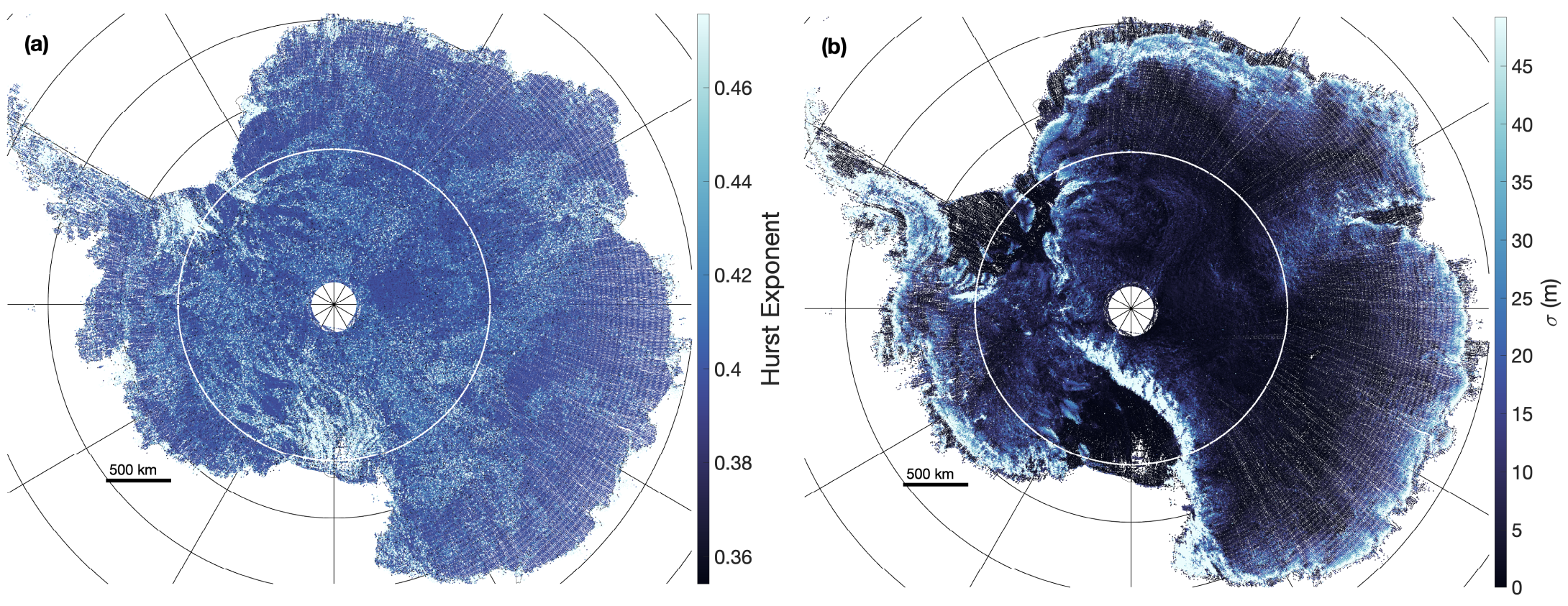
Most of the surface of Earth can be described as self-affine. This fractal property describes how the vertical topography changes along different horizontal length scales; this can be quantified through a variable called the Hurst exponent (H). In this work, I have calculated the surface roughness, including the Hurst exponent, across the entirety of the Antarctic continent using ICESat-2 ATL006 land-ice elevation altimetry tracks. This work has been published in Nature Communications.
Physics-Based Parameterizations for Mean Supraglacial Melt Lake Depth and Area Fraction
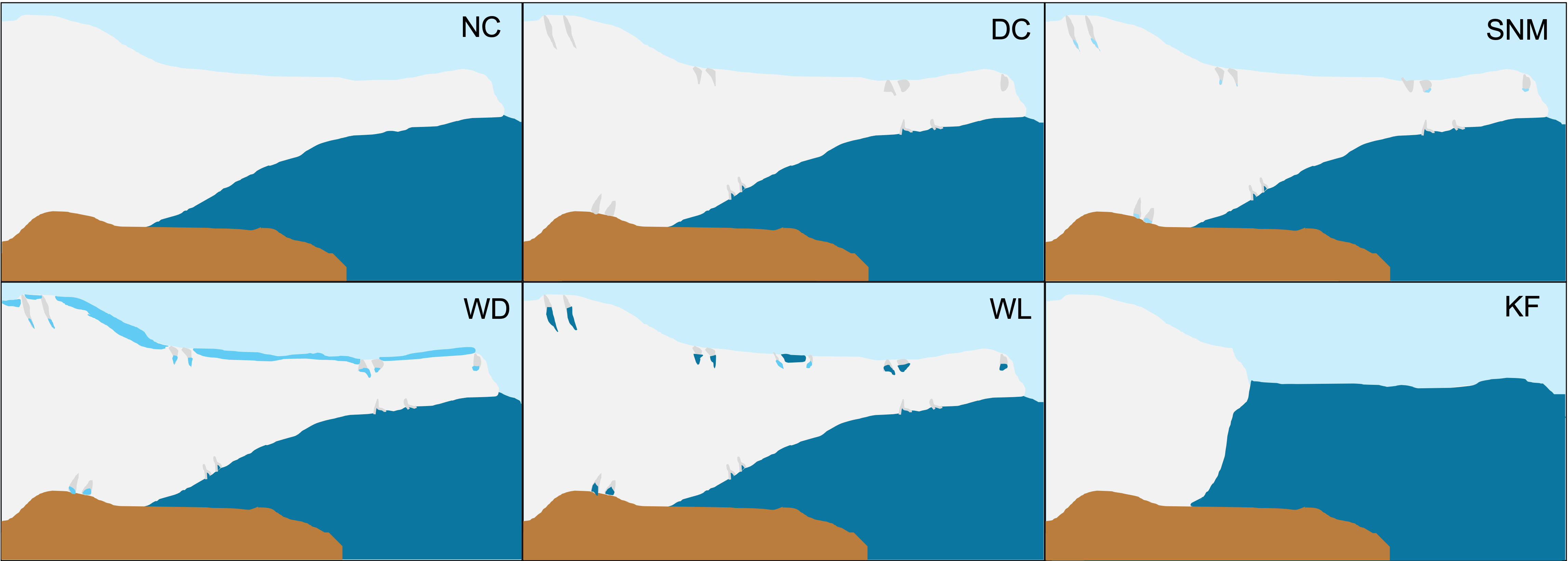
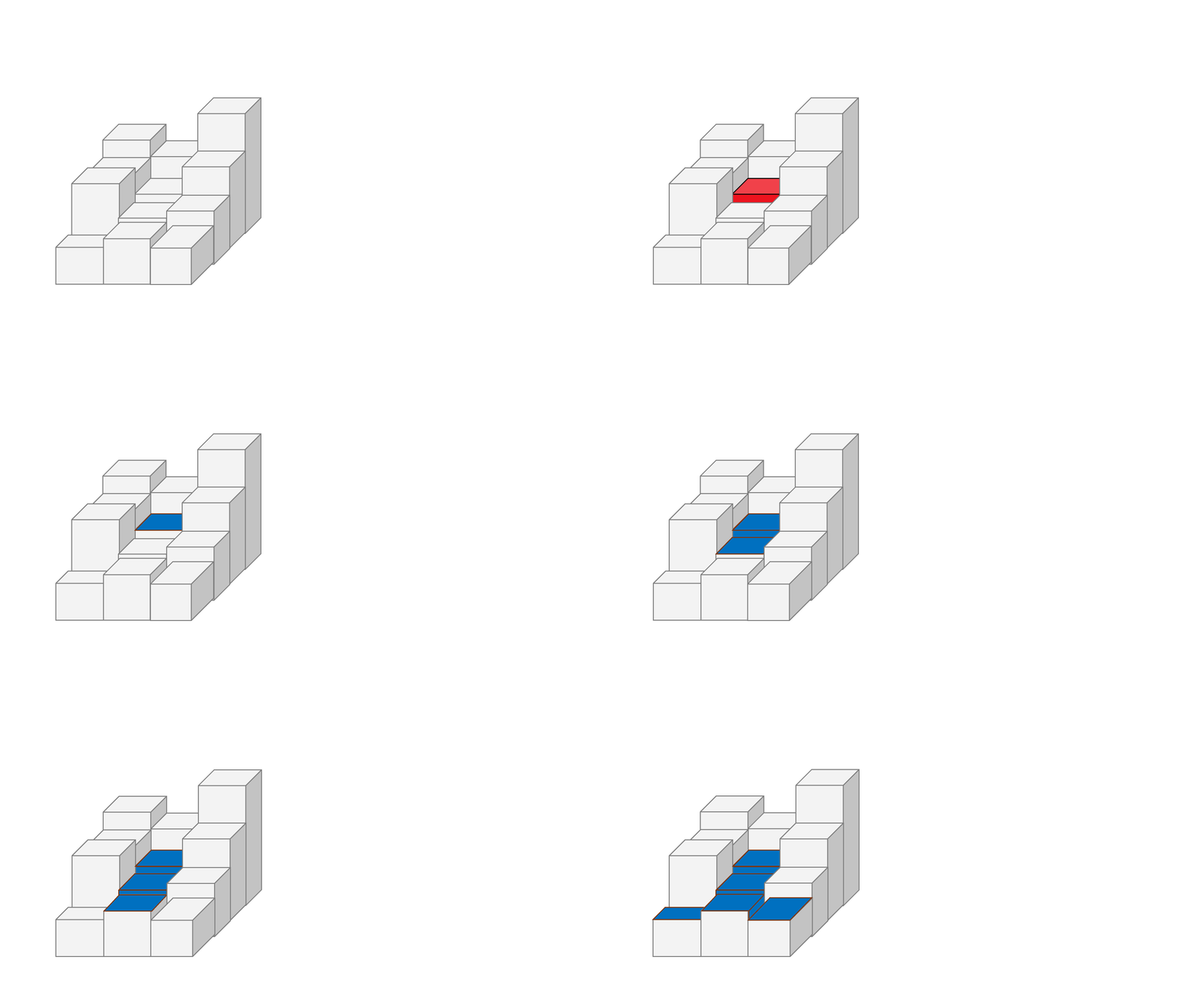
Supraglacial melt lakes are surface features that have been observed on Antarctic and Greenland Ice Sheets. They have been linked to large-scale ice shelf disintegration, such as that of the Larsen B Ice Shelf collapse in early 2002. In this work, we utilize the self-affine property of glaciers to develop a set of physics-based parameterizations that can predict the mean water depth, lake depth, and area fraction of a glacial surface for a given melt supply. This work has been published in Nature Communications.
Implementation of Supraglacial Melt Lake Parameterizations into ISSM Calving Scheme
Supraglacial melt lakes are poorly represented within existing global climate and ice sheet models. In this work, we implement the parameterizations developed in Grau et al. (2025) by adapting the existing crevasse-depth criterion calving law in ISSM. We then test these altered calving configurations by running transient Antarctic simulations from ISMIP6 to 2300 (Seroussi et al., 2024).